Cultural and Modern Influences on Skin Lightening Practices Among Nursing Mothers in Ile-Ife, Nigeria: implications for Public Health Interventions
Authors
Atinuke Arinola Ajani, Richard Adejumobi, Babajide Ijiyode, Marvelllous Ogundiran, Afolarin Torimiro, Aishat Adebayo, Olabisi Raheem, Christopher Omokanye, Macillina, Y IjadunolaFiles
Abstract
Background: While skin-lightening remains prevalent globally, pregnant and nursing mothers represent a distinct group with unique motives, increased physiological vulnerability and additional risk of potential harm to their infants. Despite these concerns, research on skin-lightening behaviours in this population remain limited. This study examined the cultural and modern influences on skin-lightening behaviours among nursing mothers in Ile Ife, Nigeria.
Methodology: This secondary analysis utilized data from a cross-sectional study conducted between May and July 2024 among mothers of children under-five. Data of 256 actively breastfeeding mothers who completed a pretested, semi-structured questionnaire were extracted. Descriptive statistics, bivariate analysis, and multivariate logistic regression were conducted, with statistical significance set at p < 0.05.
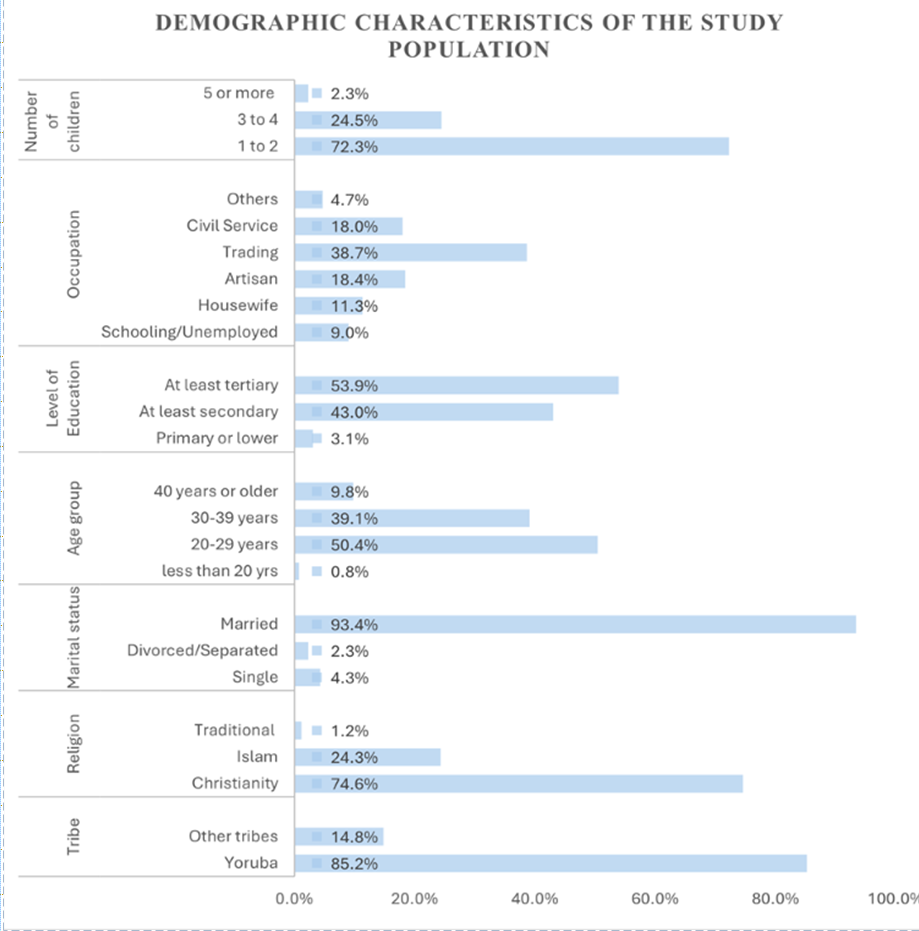
Results: The mean age of respondents was 30.46 ± 6.28 years; the majority were Yoruba (85.2%), and had media access (96.8%). Nearly half (47.3%) reported current use of skin-lightening products, with 29.3% continuing use during pregnancy, and 22.7% applying lightening creams to their children. Younger maternal age (p=0.023), lower education (p=0.039), and lighter baseline skin-complexion (p=0.001) were significantly associated with skin-lightening practices, while cultural norms and social media influence were non- significant (p=0.092 and 0.128, respectively)). Key social drivers included perceived social advantage (p=0.000), peer influence (p=0.019), and spousal encouragement(p=0.005). Overall, religious beliefs (p<0.001) and spousal influences (p=0.026) emerged as independent predictors of skin lightening behaviour.
Conclusion: Skin-lightening is highly prevalent among nursing mothers, driven more by contemporary social pressures than cultural norms. Gender-sensitive, culturally informed interventions are essential to curb this practice and reduce associated intergenerational health risks.
References
1. Sagoe, D., Pallesen, S., Dlova, N. C., Lartey, M., Ezzedine, K., & Dadzie, O. (2019). The global prevalence and correlates of skin bleaching: a meta‐analysis and meta‐regression analysis. International Journal of Dermatology, 58(1), 24–44. https://doi.org/10.1111/ijd.14052
2. Mendoza, R. L. (2014). The skin whitening industry in the Philippines. Journal of Public Health Policy, 35(2), 219–238. https://doi.org/10.1057/jphp.2013.50
3. Pollock, S., Taylor, S., Oyerinde, O., Nurmohamed, S., Dlova, N., Sarkar, R., Galadari, H., Manela-Azulay, M., Chung, H. S., Handog, E., & Kourosh, A. S. (2021). The dark side of skin lightening: An international collaboration and review of a public health issue affecting dermatology. International Journal of Women’s Dermatology, 7(2), 158–164. https://doi.org/10.1016/j.ijwd.2020.09.006
4. Afzal, H., Deshpande, S., & Carlini, J. (2025). Glowing Beyond Shades: Unveiling the Psychosocial Correlates of Skin Lightening Product Choice – A Systematic Review. Social Marketing Quarterly. https://doi.org/10.1177/15245004241309932
5. Owolabi, R. O., Musa, A. A., & Suleiman, S. (2024). A Warning Bell: The Increasing Trend of Skin Whitening in Nigeria and Its Health Implications. Journal of Skin and Stem Cell, 11(3). https://doi.org/10.5812/jssc-153387
6. Chen, H. Y., & Jablonski, N. G. (2023). Stay out of the Sun: Exploring African American College Women’s Thoughts on the Dynamics Between Colorism and Sun-related Behavior. Journal of Black Psychology, 49(4). https://doi.org/10.1177/00957984221128374
7. Yusuf, M. A., Mahmoud, N. D., Rirash, F. R., Stoff, B. K., Liu, Y., & McMichael, J. R. (2019). Skin lightening practices, beliefs, and self-reported adverse effects among female health science students in Borama, Somaliland: A cross-sectional survey. International Journal of Women’s Dermatology, 5(5). https://doi.org/10.1016/j.ijwd.2019.08.006
8. Owolabi, J. O., Fabiyi, O. S., Adelakin, L. A., & Ekwerike, M. C. (2020). Effects of skin lightening cream agents - hydroquinone and kojic acid, on the skin of adult female experimental rats. Clinical, Cosmetic and Investigational Dermatology, 13. https://doi.org/10.2147/CCID.S233185
9. Dlova, N. C., Hamed, S. H., & Tsoka-Gwegweni, A. G. (2015). Skin lightening practices: an epidemiological study of South African women of African and Indian ancestries. British Journal of Dermatology, 173(52), 2–9.
10. Offiong, A. V. (2019, February 10). Lighten them young: The story of parents who “bleach" their children. . DailyTrust.
11. Hamid, T., & Kuntari, S. (2022). Mothers’ Role in Dental Health Behaviors of Their Children in the Low-Income Community, Blitar Rural Area. Journal of International Dental and Medical Research, 15(1).
12. Utomo, A. F. R., Iskandarsyah, A., & Setiawan, A. S. (2023). Predicting a Child’s Oral Health Status from the Mother’s Oral Health Behavior. European Journal of Dentistry, 17(4). https://doi.org/10.1055/s-0042-1757569
13. Bakare, O., Oluwole, E., Anyanwu-Iyah, E., Aworinde, O., & Lawal, E. (2023). Skin Lightening: Knowledge, Attitude, Practices and the Motivations for its Use Among the Residents of Ikeja Local Government Area, Lagos. Annals of Health Research, 9(1), 1–11. https://doi.org/10.30442/ahr.0901-01-185
14. Egbi, O. G., & Kasia, B. (2021). Prevalence, determinants and perception of use of skin lightening products among female medical undergraduates in Nigeria. Skin Health and Disease, 1(3). https://doi.org/10.1002/ski2.46
15. Ndiritu, A., Aden, H., & Nur, A. (2021). Prevalence and socio demographic factors associated with usage of skin lightening products among women of reproductive age in Mogadishu, Somalia. International Journal of Applied Academic Studies, 1(1), 1–9.
16. Osei, M., Ali, M., Owusu, A., & Baiden, F. (2018). Skin-lightening practices among female high school students in Ghana. Public Health, 155, 81–87. https://doi.org/10.1016/j.puhe.2017.11.016
17. Asumah, M., Abdulai, A., Dzantor, E., Ayamgba, V., Gariba, A., Buremah-Excellence, G., & Donkor, D.-R. (2022). Prevalence of skin bleaching and its associated factors among young adults in Ghana. Public Health and Toxicology, 2(1). https://doi.org/10.18332/pht/146947
18. Owusu-Agyei, M., Agyei, M., & Ogunleye, T. A. (2020). Skin-lightening practices among shoppers in select markets in Kumasi, Ghana: A cross-sectional survey. JAAD International, 1(2), 104–110. https://doi.org/10.1016/j.jdin.2020.05.006
19. Yayehrad, A. T., Lule, A., Tebabal, A. T., Esmael, M., Risqe, N., Temesgen, S., Negash, S., Hamid, S., Tasew, S., Mekonen, S., & Siraj, E. A. (2023). Concern on Skin Lightening Product Safety: Level of Awareness and Associated Factors Among Female Users in Bahir Dar City, Ethiopia. Clinical, Cosmetic and Investigational Dermatology, 16. https://doi.org/10.2147/CCID.S416460
20. Nyoni-Kachambwa, P., Naravage, W., James, N. F., & Van der Putten, M. (2021). A preliminary study of skin bleaching and factors associated with skin bleaching among women living in zimbabwe. African Health Sciences, 21(1), 132–139. https://doi.org/10.4314/ahs.v21i1.18
21. Bamerdah, S., Alhothali, O. S., Aldajani, B. M., Alghanemi, L., & Mleeh, N. T. (2023). A Cross-Sectional Study of the Knowledge, Practice, and Attitude Towards Skin-Lightening Products Among the General Population in the Western Region of Saudi Arabia. Cureus. https://doi.org/10.7759/cureus.34069
22. Nadia Farooq, Azra Shaheen, Naseem Amin Dhedi, & Tayyaba Iqbal. (2024). The darker perspective behind skin lightening practices and its effect on mental Health. Journal of University Medical & Dental College, 15(4). https://doi.org/10.37723/jumdc.v15i4.886
23. Benson, A. O., & Onunu, A. N. (2021). A Community Survey on the Prevalence, Determinants and Socioeconomic Factors associated with Skin Lightening Practices in Benin City, South-South, Nigeria. West African Journal of Medicine, 38(8).
24. Solanke, B., & Shobanke, D. (2014). Male partner controlling behavior as a determinant of contraceptive use among women in Nigeria. African Journal for the Psychological Study of Social Issues (AJPSSI), 17(2), 156–166.
25. Ezeanolue, E. E., Iwelunmor, J., Asaolu, I., Obiefune, M. C., Ezeanolue, C. O., Osuji, A., Ogidi, A. G., Hunt, A. T., Patel, D., Yang, W., & Ehiri, J. E. (2015). Impact of male partner’s awareness and support for contraceptives on female intent to use contraceptives in southeast Nigeria. BMC Public Health, 15(1), 879. https://doi.org/10.1186/s12889-015-2216-1
26. Sinai, I., Azogu, O., Dabai, S. S., & Waseem, S. (2024). Role of men in women’s health service utilisation in northern Nigeria: a qualitative study of women, men and provider perspectives. BMJ Open, 14(8), e085758. https://doi.org/10.1136/bmjopen-2024-085758
27. Burki, T. (2021). Skin-whitening creams: worth the risk? The Lancet Diabetes and Endocrinology, 9(1). https://doi.org/10.1016/S2213-8587(20)30400-9
28. Agorku, E. S., Kwaansa-Ansah, E. E., Voegborlo, R. B., Amegbletor, P., & Opoku, F. (2016). Mercury and hydroquinone content of skin toning creams and cosmetic soaps, and the potential risks to the health of Ghanaian women. SpringerPlus, 5(1). https://doi.org/10.1186/S40064-016-1967-1
Downloads
Details
License
Copyright (c) 2026 Atinuke Arinola Ajani, Richard Adejumobi, Babajide Ijiyode, Marvelllous Ogundiran, Afolarin Torimiro, Aishat Adebayo, Olabisi Raheem, Christopher Omokanye, Macillina, Y Ijadunola

This work is licensed under a Creative Commons Attribution 4.0 International License.
This work is licensed under a Creative Commons Attribution 4.0 International (CC BY 4.0) license. To view a copy of this license, visit https://creativecommons.org/licenses/by/4.0/.