Pattern and Outcome of Armed Robbery Related Gunshot Injury in a Teaching Hospital in Southwest, Nigeria
Authors
Files
Abstract
Background
Armed robbery attacks are the commonest cause of civilian gunshot injuries (GSI) in published data in Nigeria. This study was done to determine the pattern and outcome of the armed robbery-related gunshot injuries.
Methods
A prospective observational study was done over a 30-months period from January 2018 to June 2020 at a teaching hospital in southwest Nigeria. The study recorded details on patient demographics, firearm types, gunshot wound characteristics, attack timing and location, pre-attack events, and outcome status according to predefined criteria. Continuous variables were expressed as mean and standard deviation, while categorical variables were expressed as percentages. Association between categorical variables was assessed using Chi square at p <.05 level of significance.
Results
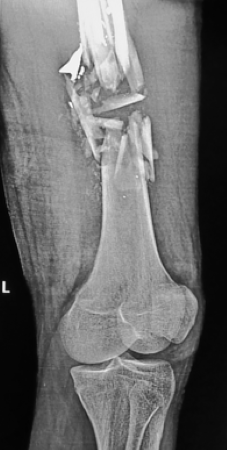
Seventy-nine patients presented with gunshot injuries over the study period, 34(43%) were because of armed robbery attack. The mean age was 35.2 years ±8.8SD with age group 25-44 years being the most commonly affected and male to female ratio of 16:1.The extremities was most injured region in 38.2% and 67.6% of the attacked occurred at night with 20.6% mortality rate. Outcome of the patient and type of weapons used were significantly associated with p =.04.
Conclusion
Armed robbery-related GSI affects predominantly young adults. The extremities were most commonly injured, and weapons of injury, were predominantly low velocity, with a high mortality when fired at close range. There is an increasing need to reduce the prevalence through youth engagement and effective night policing.
References
1. Persad IJ, Reddy RS, Saunders MA, Patel J. Gunshot injuries to the extremities : experience of a U . K . trauma centre. Injury. 2005;36(3):407–11.
2. Adekoya AF. Youth unemployment and violent crime: Evidence form developing countries in Africa. J Acad Res Econ [Internet]. 2020;12(3):408–19. Available from: https://www.researchgate.net/publication/347973524
3. Bakari AA, Saad Y, Tela U, Myocardial C, Rates I. Management Of Gunshot Injuries Due To Insurgency In The North-Eastern Nigeria. internet J Rescue Disaster. 2014;10(1):19177.
4. Samuel OA, Otu IM, Olumide KA. An Overview of the Impact of Special Anti-Robbery Squad (SARS) In Nigeria. Int J Hum Resour Stud. 2018;8(4):180.
5. Onuminya JE, Ohwowhiagbese E. Pattern of civilian gunshot injuries in Irrua, Nigeria. South African J Surg. 2005;43(4):170–2.
6. Thanni LOA. Epidemiology of injuries in Nigeria—A systematic review of mortality and etiology. Prehosp Disaster Med. 2011;26(4):293–8.
7. Alabi A, Harcourt SL, Ijah OA, Friday R, Aaron FE. Gunshot Injuries in Port Harcourt, Nigeria: The University Teaching Hospitals’ Experience. Int J Trop Dis Heal. 2021;1–7.
8. Oboirien M, Agbo SP, Adedeji BK. Civilian gunshot injuries: Experience from Sokoto, North-West, Nigeria. J Trauma Treat. 2016;5(285):1222–2167.
9. Omoke N. Firearm Injuries Received in Emergency Room of a Nigerian Teaching Hospital: Analysis of Pattern, Morbidity, and Mortality. Niger J Clin Pract. 2017;20:587–94.
10. Garba ES, Ukwenya AY. Sectarian religious crises in Kaduna, Nigeria: 30 cases of abdominal gunshot injuries. South Med J. 2002;95(10):1228.
11. Nottidge TE, Ekpe E. AUDIT OF GUNSHOT INJURIES IN A SOUTHERN NIGERIAN TERTIARY. Ibom Med J. 2019;12(February):23–7.
12. Abbas AD, Bakari AA, Abba AM. Epidemiology of armed robbery related gunshot injuries in Maiduguri , Nigeria. Niger J Clin Pract. 2012;15(1):19–22.
13. Mactrotrends. Ado-Ekiti, Nigeria Metro Area population 1950-2023. 2023.
14. S.P. K. Sample Size calculation [Internet]. updated July 24, 2019. [cited 2020 Nov 20]. Available from: https://clincalc.com/stats/samplesize.aspx
15. Solagberu BA. Epidemiology and outcome of gunshot injuries in a civilian population in West Africa. Eur J Trauma. 2003;29:92–6.
16. Grosse Perdekamp M, Pollak S, Thierauf A, Strassburger E, Hunzinger M, Vennemann B. Experimental simulation of reentry shots using a skin-gelatine composite model. Int J Legal Med. 2009;123:419–25.
17. Ogunlusi JD, Oginni LM, Ikem IC, Olasinde AA, Hamilton OG, Akinbolagbe AM TM. Gunshot Injuries in A Nigerian Hospital. Niger J Orthop Trauma. 2006;5(2):34–7.
18. Odatuwa-omagbemi DO, Otene I, Efetobor R, Enemudo T, Imonijevwe ES, Erhigigwe T. Gunshot injuries : experience in a tertiary health facility in the Niger Delta Region of Nigeria. Pan Afr Med J. 2022;43(133).
19. Toluse AM, Idowu OO, Ogundele OO, Egbewole AO. Injury epidemiology at a trauma center in Southwest Nigeria. African J Trauma. 2016;5(1):1.
20. Udosen AM, Etiuma AU, Ugare GA, Bassey OO. Gunshot injuries in Calabar, Nigeria: an indication of increasing societal violence and police brutality. Afr Health Sci. 2006;6(3):170–2.
21. Oboirien M. Civilian Gunshot Injuries : Experience from Sokoto , North-West , Nigeria. J trauma Treat. 2016;5(1):1–3.
22. Saidi HS, Nyakiamo J, Faya S. Gunshot injuries as seen at the Aga Khan Hospital, Nairobi. East Afr Med J. 2002;79(4):188–92.
23. Bakhiet M. Gunshot injuries : patterns , presentations , and outcomes of civilian hospital experiences in a developing country setting. Sudan J Med Sci. 2023;18(1):71–83.
24. Gobaud AN, Mehranbod CA, Dong B, Dodington J, Morrison CN. Absolute versus relative socioeconomic disadvantage and homicide : a spatial ecological case – control study of US zip codes. Inj Epidemiol [Internet]. 2022;1–9. Available from: https://doi.org/10.1186/s40621-022-00371-z
25. Gugala Z, Lindsey RW. Classification of gunshot injuries in civilians. Clin Orthop Relat Res. 2003;408(408):65–81.
26. Niaz K, Shujah IA. Civilian perspective of firearm injuries in Bahawalpur. J Pakistan Med Assoc. 2013;248(20):20–4.
27. Masters J, Laubscher M, Sa F, Orth M, Graham S, Chb MB, et al. The gunshot-related injuries in trauma ( GRIT ) study : A profile of patients affected by gunshot- related orthopaedic injuries across South Africa. South African Med J. 2021;111(7):655–60.
28. Baum GR, Hayward D, Mackay BJ. Gunshot Wounds : Ballistics , Pathology , and Treatment Recommendations , with a Focus on Retained Bullets. Orthop Res Rev. 2022;(August):293–317.
29. Stefanopoulos PK, Pinialidis DE, Hadjigeorgiou GF, Filippakis KN. Wound ballistics 101: the mechanisms of soft tissue wounding by bullets. Eur J trauma Emerg Surg. 2017;43:579–86.
30. Davies M, Kerins M, Glucksman E. Inner-city gunshot wounds–10 years on. Injury. 2011;42(5):488–91.
31. Omoke NI. Firearm injuries received in emergency room of a Nigerian teaching hospital: Analysis of pattern, morbidity, and mortality. Niger J Clin Pract. 2017;20(5):587–94.
32. Lema MK, Chalya PL, Mabula JB, Mahalu W. Pattern and outcome of chest injuries at Bugando Medical Centre in Northwestern Tanzania. J Cardiothorac Surg. 2011;6:1–7.
33. Iloh GU, Chuku A, Ofoedu J, Ugwele O, Onyekwere J, Amadi A. The emerging trend in the epidemiology of gunshot injuries in the emergency department of a Nigerian tertiary hospital in a State without formal prehospital emergency medical services. Ann Trop Med Public Heal. 2013;6(4):435.
Downloads
Details
License
Copyright (c) 2025 Dr. Anthony A. Olasinde, Prof. Dare J. Ogunlusi, Dr. Moruf B. Yusuf, Prof. Kehinde S. Oluwadiya

This work is licensed under a Creative Commons Attribution 4.0 International License.
This work is licensed under a Creative Commons Attribution 4.0 International (CC BY 4.0) license. To view a copy of this license, visit https://creativecommons.org/licenses/by/4.0/.